Backlog readiness and developer context
Know What Is Ready
Before It Enters The Sprint.
Connect product evidence and decisions to readiness-checked work, then carry the plan, standards, and implementation context into the IDE.
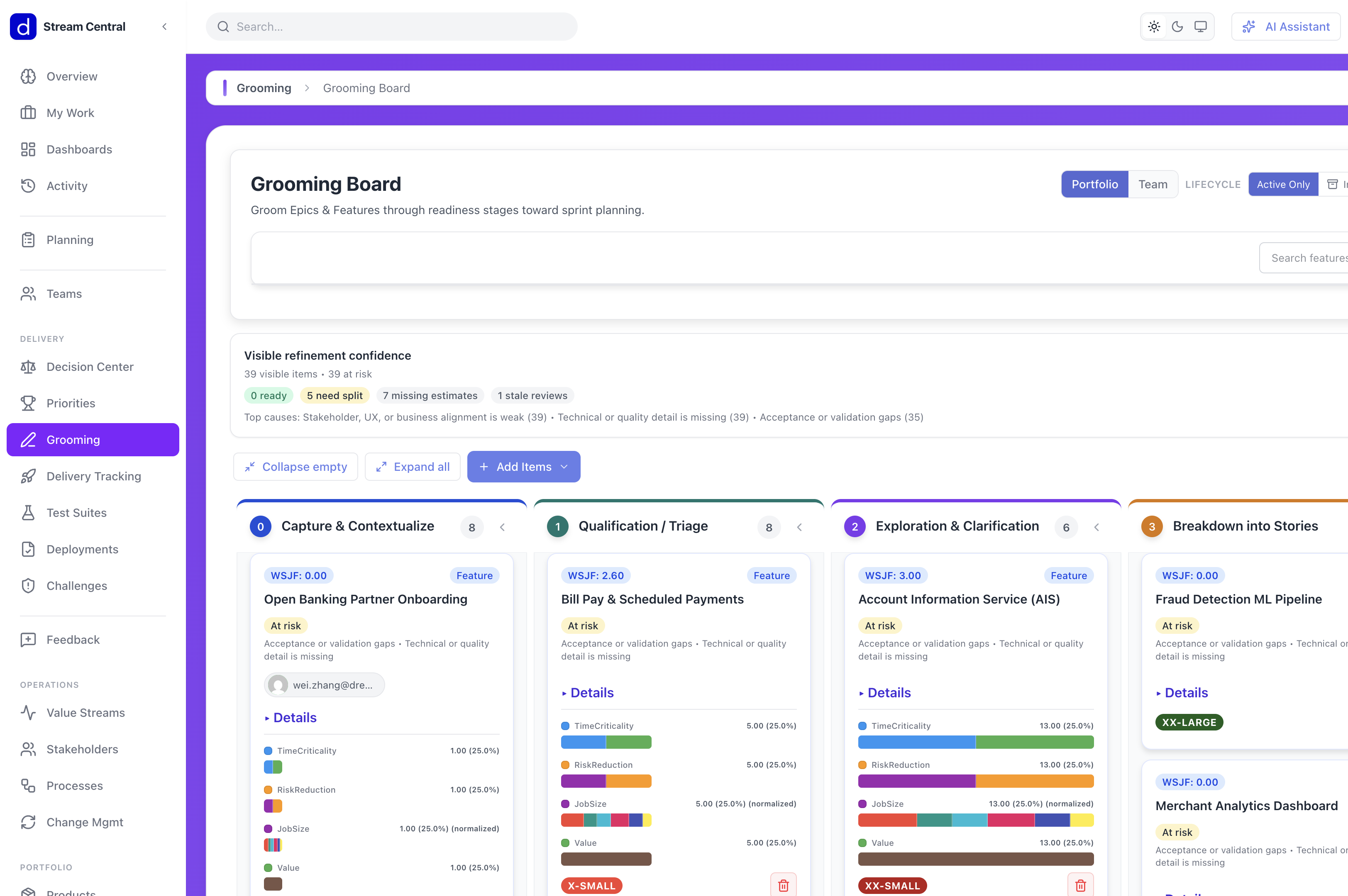
Why Sprints Slip Before Coding Starts
Most delivery surprises are not caused by effort. They come from committing work that was never ready and losing the why between planning and the IDE.
Oversized work hides until mid-sprint
Split detection, missing criteria, and shallow acceptance checks arrive too late—after the team has already committed.
Stakeholder evidence never reaches the work item
Demo comments, storyboard feedback, and inbox notes stay fragmented, so priorities lose the signal that justified them.
Decisions fade into Slack and slide decks
Trade-offs get made, then disappear. Engineers inherit a ticket without the decision context behind it.
Developers rebuild context in the IDE
Plans, standards, architecture principles, and readiness gaps rarely arrive together where coding actually happens.
Leaders only see risk after delivery slips
Dashboards report what already went wrong instead of helping teams pressure-test readiness before planning.
Start With The Readiness Workflow
Explore the wedge first, then the broader Strategy-to-Code depth behind it.
Backlog readiness
See readiness checks, split detection, AI review, and IDE handoff in one focused workflow.
Learn moreFeatures
Explore readiness, evidence-backed decisions, developer context, and delivery visibility.
Learn moreUse cases
See refinement, sprint planning, stakeholder decisions, and implementation handoff by role.
Learn moreCompare
Understand where Stream Central fits versus trackers, portfolio suites, research tools, and eng dashboards.
Learn moreThree Proof Pillars
One readiness-to-code promise, supported by evidence and implementation context.
Readiness before planning
Catch oversized work, missing acceptance criteria, unclear motivation, and dependency gaps before teams commit.
Evidence behind the work
Keep feedback, demos, storyboards, and evidence themes linked to structured decisions and delivery work.
Context that reaches implementation
Hand plans, readiness findings, implementation standards, and architecture principles to VS Code, Cursor, and coding agents.
Follow One Work Item End To End
Stream Central makes the chain visible and actionable. Evidence informs decisions, readiness checks the work, and the IDE receives the context needed to build.
Capture evidence
Link feedback, demo reviews, or storyboard signal to the work under consideration.
Check readiness
Review split risks, acceptance criteria, motivation clarity, and missing context before planning.
Hand off to the IDE
Carry the plan, readiness findings, standards, and architecture principles into VS Code or Cursor.
Close with history
Mark work complete and keep delivery history attached to the same work item.
Strategy-to-Code Depth Behind The Workflow
Storyboards, demos, and structured feedback
Pressure-test product narratives with storyboards, demo reviews, and public showcase sharing before expensive delivery work begins.
Evidence-backed decision workflows
Cluster stakeholder signal into evidence themes and review consequential calls in Decision Center with linked work context.
Delivery visibility for operators
Use flow, DORA, defect, and quality signals as supporting evidence—not as a substitute for upstream readiness.
Capabilities, standards, and architecture context
Keep implementation standards and architecture principles close to the work so IDE handoffs stay grounded.
Why Connected Context Matters
Readiness only works when evidence, decisions, and implementation guidance reinforce each other instead of living in separate systems.
Evidence & Decisions
Keep stakeholder signal attached to the work and the trade-offs behind it.
Readiness Intelligence
Pressure-test work before planning with advisory readiness reviews and split detection.
Developer Context
Deliver plan, standards, and readiness findings where engineers and agents actually work.
Beyond readiness, Stream Central connects stakeholder evidence, structured decisions, delivery visibility, and implementation context in one Strategy-to-Code architecture.
Built For How Teams Already Work
Stream Central is the system of record for readiness-to-code—work, evidence, plans, standards, and agent handoff. Optional connectors and API clients can import, link, or export work where your organization still needs a bridge.

Simple, Transparent Pricing
Start with a 14-day free trial. No credit card required.
Loading pricing...
Built For Delivery-Critical Roles
Engineering & Delivery Leaders
Improve sprint predictability with readiness reviews, clearer handoffs, and less mid-sprint discovery.
Product Managers & Owners
Keep stakeholder evidence and decisions attached to work so refinement produces commit-ready items.
Developers & Tech Leads
Receive plan context, readiness findings, and implementation standards in the IDE instead of reconstructing them from tabs.
What Stream Central Is Not
Not another issue tracker, not a heavyweight portfolio rollout, and not a dashboard that only reports problems after delivery.
Ready to pressure-test your backlog?
See the readiness-to-code workflow, then start a 14-day free trial with your team.